Issues
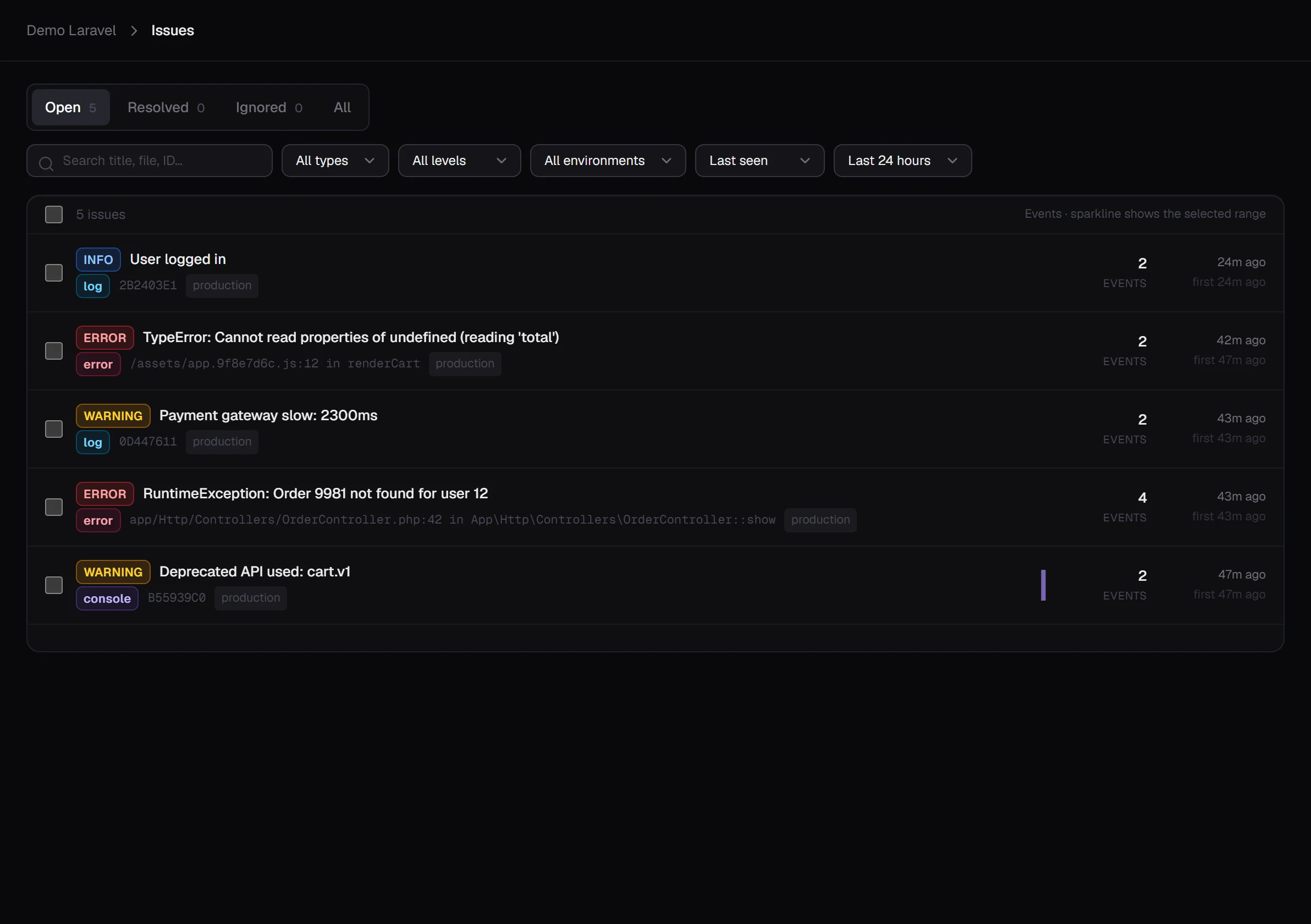
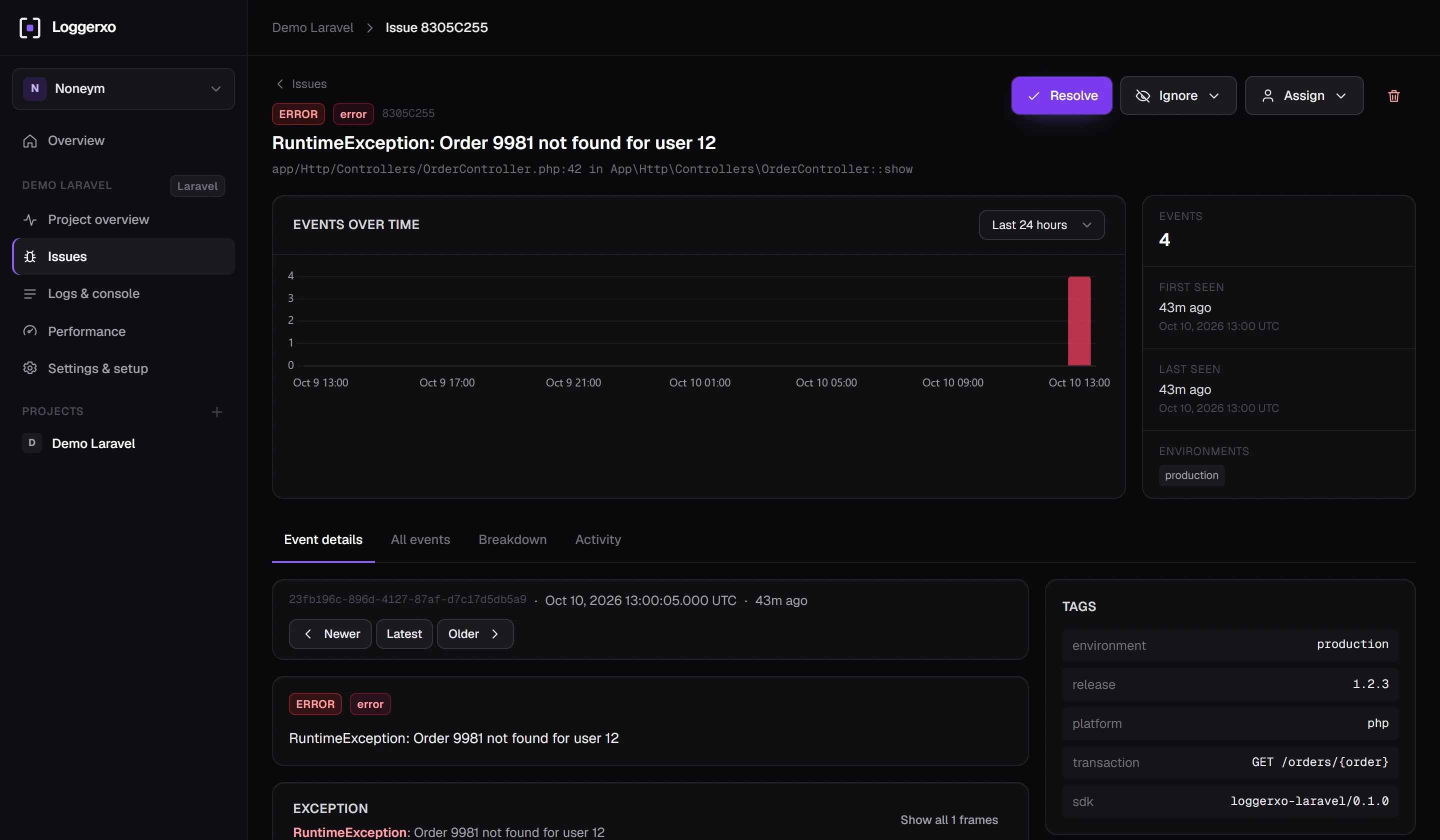
Exceptions and repeated log problems are fingerprinted into one issue each, with stack trace, code context, breadcrumbs, request and user. Resolve, ignore, assign. Get told when it comes back.
Open source, MIT licensed
Loggerxo groups exceptions into issues, streams logs and console output, and shows which routes are slow.
Works with what you already run
Every event is stored once in ClickHouse. Issues, logs and performance are different windows onto the same data, so you can jump from a slow request to the error it caused.
Exceptions and repeated log problems are fingerprinted into one issue each, with stack trace, code context, breadcrumbs, request and user. Resolve, ignore, assign. Get told when it comes back.
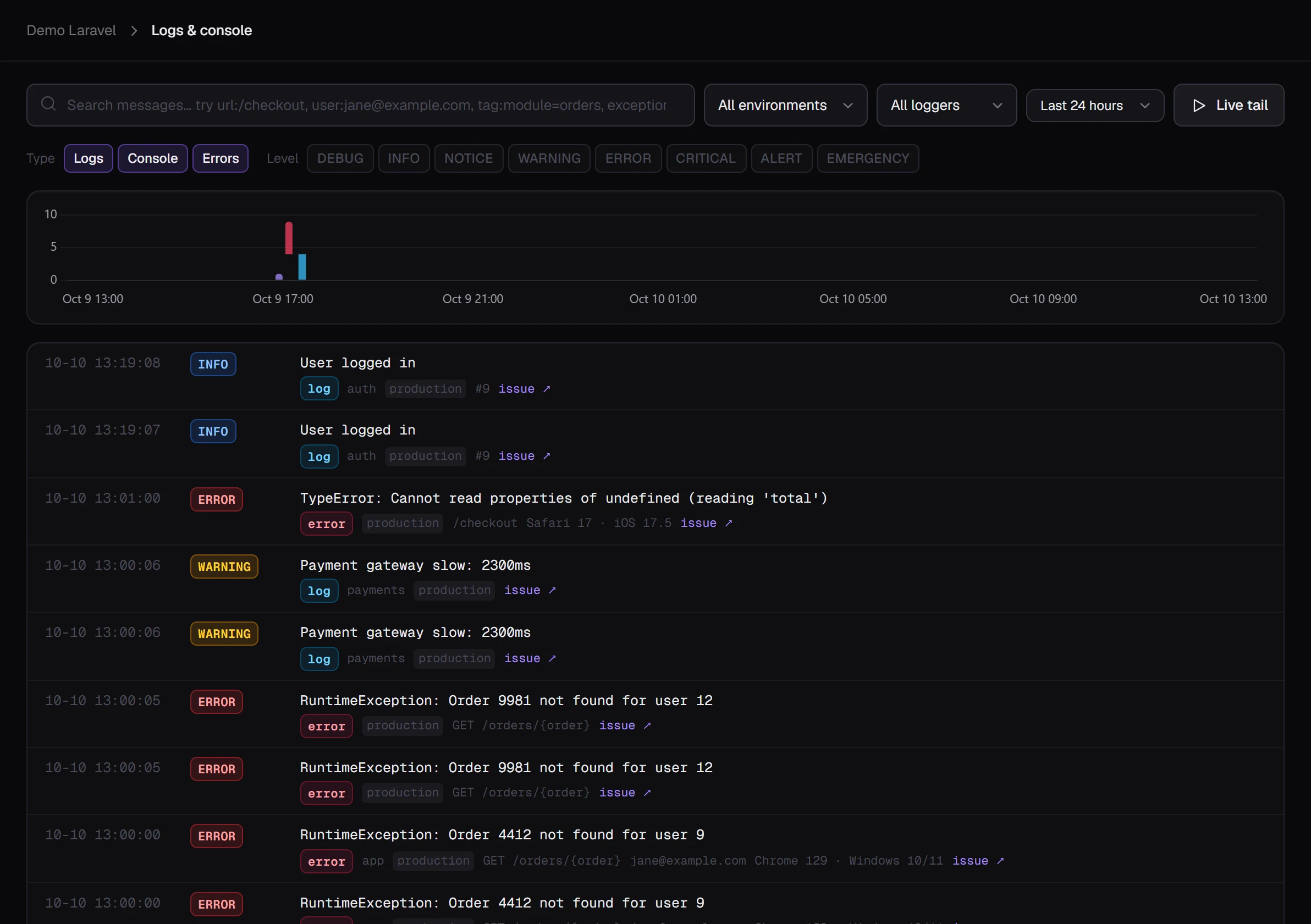
Every Laravel log level and every browser console error, searchable by text, user, URL or tag. Live tail while you deploy.
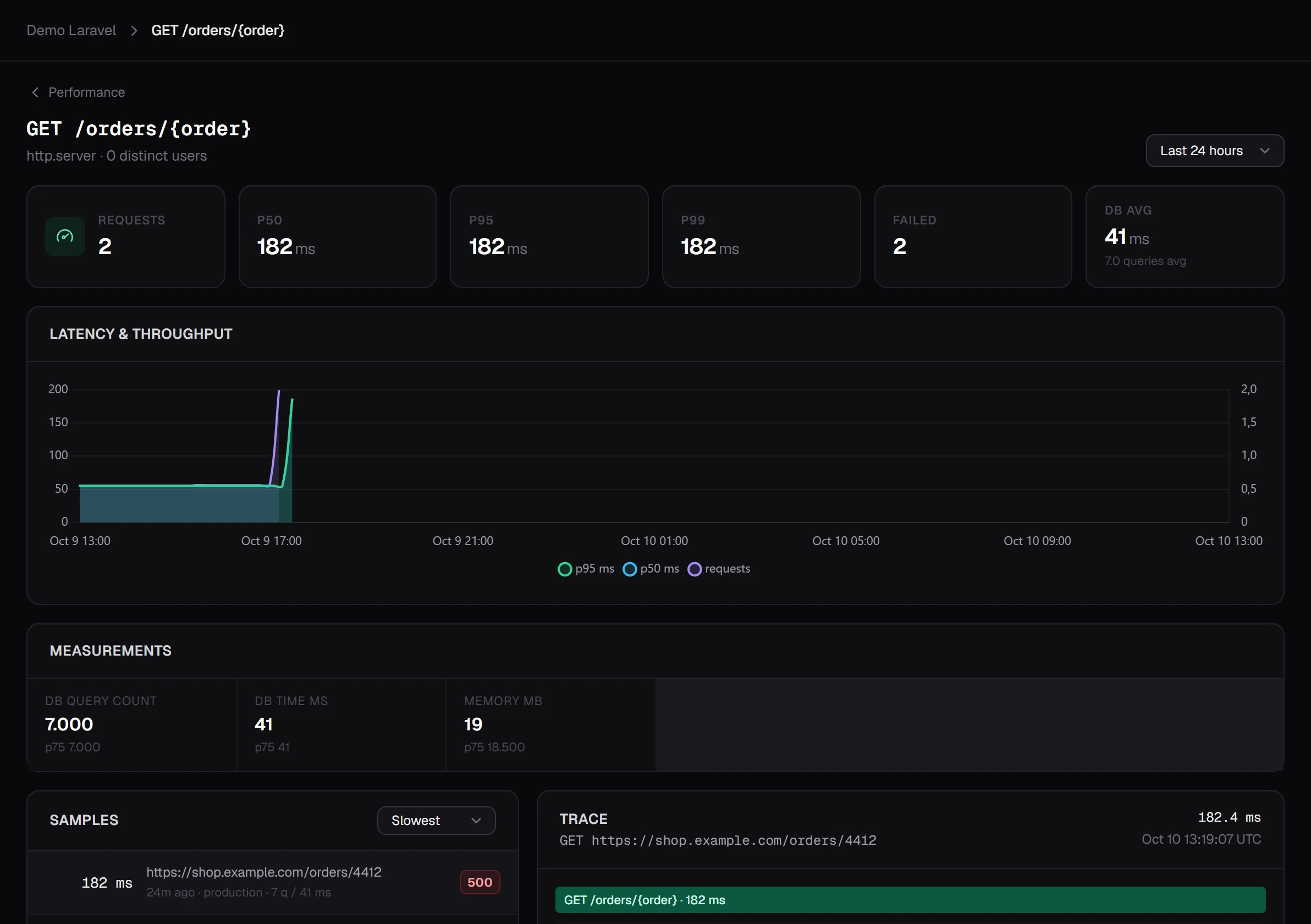
p50 and p95 per route, the queries behind a slow request as a waterfall, and web vitals measured on real page loads.
Exceptions, log lines and request timings are captured automatically once the key is set. Anything else can post plain JSON to the HTTP API.
composer require noneym/loggerxo-laravel

# .env
LOGGERXO_DSN=https://lx_your_key@loggerxo.com
LOG_STACK=single,loggerxo
<script src="https://loggerxo.com/sdk/loggerxo.js"
        data-key="lx_your_key"
        data-env="production"></script>
E-mail and Telegram for new issues, regressions, spikes and critical logs. Per-issue cooldowns so a storm is one message.
Events live in ClickHouse, issues and teams in MariaDB, the ingest queue in Redis. Retention is a number you set per project.
One Dockerfile runs the web app, ingest workers, alert queue and scheduler. Configure everything with environment variables.
Stack traces, request bodies and user identifiers never leave your servers. Sensitive keys are masked twice: in the SDK and on ingest.
The Laravel package, the browser script and the HTTP API are documented on one page.